Teacher pay has been a hot topic in North Carolina this election year. Despite recent increases, new rankings have NC’s average teacher pay remaining stagnant. View full story here.
Ramona Powers
NCSBA Legislative Update – May 13, 2016
*LEAs in Grave Danger of Losing Funds to Charters*
HB 539 Update
We know that HB 539– Charter School Funding, was discussed in the House Republican caucus this week. The charter community is continuing to make a hard push in the House to have this bill moved to the floor for a vote. It is critically important that you communicate with your House member(s) throughout the weekend to express how harmful this legislation would be for your school district and ask them to oppose it. Remember that if HB 539 goes to the House floor it would only need to receive an up or down vote (not amendable).
When communicating about HB 539 make sure to focus on these points:
(1) Specify the pots of program specific monies that your district would have to transfer if this bill becomes law (reimbursements, gifts, federal grants, etc.). Click here to learn more about what program specific funds would have to be transferred to charters.
(2) Emphasize that charter schools can already seek out their own gifts, federal grants, reimbursements etc. without having to take them from school districts. For example, school districts would have to transfer E-Rate reimbursements under HB 539 but charters already have the ability to seek out E-Rate reimbursements if they so choose.
Video and Grassroots Advocacy
Be sure to continue sharing the video that touches on the LEA/charter school funding sharing issue. The link to the video is: https://youtu.be/Ai1al22B3DU
Also use this fact sheet on the issue at this link: https://ncsbac.org/charter-school-funding-issues
HB 1111 – Alternative Charter School Funding Bill
As we reported to you last week, NCSBA and NCASA brought together a group of school board members, superintendents, finance officers, and board attorneys to see if we could develop another way to structure the charter school funding system. What this group came up with was a compromise that disentangles LEA and charter school funding altogether by providing charter schools with their own funding streams at both the State and local levels. Legislation to accomplish this was filed this week as HB 1111. The bill is sponsored by Reps. Charles Jeter (R-Mecklenburg), Leo Daughtry (R-Johnston), Linda Johnson (R-Cabarrus), and Robert Reives (D-Chatham). You can read more about what HB 1111 does here.
The goals of HB 1111 are to:
(1) Disentangle any financial relationship between LEAs and charter schools.
(2) Provide additional funding for charters (approximately $48 million) that does not come at the expense of LEAs.
(3) Create a system that does not foster lawsuits.
Some in the charter community are already circulating claims that HB 1111 would take money away from and harm charter schools. The fact is that HB 1111 would generate approximately $48 million in additional funding for charter schools in addition to allowing them to ask county commissioners for capital funding. To read the details about what HB 1111 does click here.
Budget News
House Education Budget Approved
Budget subcommittees in the House met Thursday to unveil, review, and advance their sections of the House’s 2016-17 budget adjustments. On the K-12 public education side, the House Ed Appropriations Subcommittee started with a $8.419 billion total spending plan for this fiscal year as established by the biennium budget enacted last session. The subcommittee proposed an increase of $12.9 million, or 0.2%. Salaries and benefits for teachers and educators were not part of these adjustments as those items are handled by the full appropriations chairs. Click here to see the money report and here to see the special provisions.
Below are the notable components of the education budget approved by the subcommittee.
Virtual Charter Pilots. The approved budget would loosen requirements for the two virtual charter school pilots.
(1) It would allow the virtual charters to have a higher withdrawal rate than the original legislation. Currently, neither virtual charter can have a student withdrawal rate higher than 24% in any school year. The approved education budget would raise that to 34%.
(2) It would exclude additional types of students from the withdrawal rate, making it easier for the virtual charters to stay below the withdrawal rate caps.
(3) It would increase the portion of virtual charter teachers who can be non-NC residents from 10% to 20%.
School Voucher Programs. No new money would be appropriated for the Opportunity Scholarship school voucher program but there would be a statutory change to expand the portion of vouchers that can be awarded to 1st grade students who have not attended a public school. The current law allows vouchers to be awarded to kindergarten and grade 1 students even if they have not previously been enrolled in a public school, but caps the portion of newly awarded vouchers they can receive at 35%. Under the House budget language, Grade 1 students would be removed from this cap, meaning that there is no limit on how many new vouchers they can receive whether or not they have previously attended a public school.
There is also an increase of $5.8 million to the special education voucher program.
ADM Growth. Public school ADM growth is fully funded ($46.8 million).
Literacy Coaches. There is an appropriation of $25 million to put K-3 Literacy Coaches in the lowest performing 20% of elementary schools across the state. This would be the first State appropriation for literacy coaches in any public schools since the line-item was zeroed out in 2009.
Advanced Teaching Roles/Elevating Educators Act. Modified language from last session’s Elevating Educators Act is included in the subcommittee’s approved budget. This provision establishes a three-year pilot program where 10 LEAs would experiment with models of differentiated pay for teachers linked to advanced teaching roles (new or additional roles and responsibilities). There would be a $1 million set aside for this pilot.
A-F School Performance Grades. The formula for calculating A-F letter grades for schools is changed from 80% assessment scores 20% growth to a 50-50 split between the two components. The 15-point scale is also made permanent (it is scheduled to end with this year’s set of grades).
Read to Achieve. Like last year’s House budget, this year’s House budgets contains several provisions to improve the Read to Achieve program. Among these would be a requirement for the SBE to expand the types of diagnostic and formative assessments school districts could use to measure reading progress in grades K-3.
Other Funding Increases. Digital Learning Plan ($9.4 million); Textbooks/Digital Resources ($11.7 million)
House Budget Timeline
The full House budget, including details of employee compensation, is expected to be released Monday morning. An all-day meeting of the full House Appropriations Committee is set for Tuesday to take up and amend the budget proposal. From there, the budget is expected to move to the House floor on Wednesday and be approved Thursday. We also know that the bill number for the budget bill will be HB 1030.
Notable Bills Filed This Week
HB 1080- Achievement School District. Rep. Rob Bryan’s legislation to mandate that certain low-performing schools be turned over to charter operators via an Achievement School District was officially filed this week. The bill is HB 1080. NCSBA opposes this bill because of the significant mechanical and structural problems with dividing school operation responsibility in addition to the lack of evidence of success with this model in other states with this model. Click here to read more via NCSBA’s Issue Brief.
SB 862- Opp. Scholarships Forward Funding. This bill was filed by Sen. Chad Barefoot (R-Wake). It would significantly increase funding for the Opportunity Scholarship voucher program. A reserve fund would be created for voucher awards and there would be an automatic transfer of funds from the General Fund to this reserve fund that would automatically increase each year. Funding for the program would be increased from $17.6 million to $44.8 million for the 2018-19 school year. This number would rise by $10 million each year thereafter until it reaches $134.8 million in the 2027-28 school year.
New Bills: Click here to see all NCSBA-tracked bills that were filed this week.
Upcoming Legislative Meetings and Events
Monday, May 16
10:00 AM
The House will convene for session.
11:30 AM
The Senate will convene for session.
Tuesday, May 17
9:30 AM
The House Appropriations Committee will meet to take up the House budget.
Wednesday, May 18
Thursday, May 19
Leanne E. Winner
Director of Governmental Relations
N.C. School Boards Association
(919)747-6686 direct dial
Bruce Mildwurf
Associate Director of Governmental Relations
N.C. School Boards Association
(919) 606-3916 mobile
Bryan Holloway
Associate Director of Governmental Relations
N.C. School Boards Association
(919)747-6677 direct dial
DPI Says Where Transgender Students Use Bathroom is Local Sc Bd Decision
State Education officials say that the issue of where transgender students use the bathroom in public school districts is up to each local district. View full story here.
Great Schools Need Great Leaders: Principals & Asst. Principals Need Salary Increases
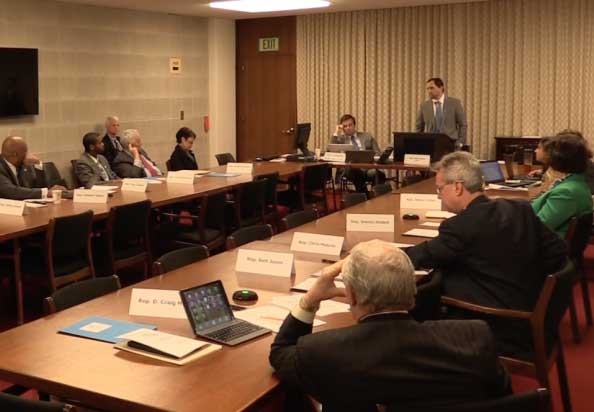
EdNC reports on how reps of several education organizations spoke to the House Ed Appropriations Committee meeting on Thursday. While all organizations stressed the importance of enhanced teacher salaries, some also noted that Principal and Asst. Principal salaries also need to be addressed. Read full article here.
NCSBA Legislative Update – May 6, 2016
State Budget Update
The Senate and House have agreed on a $22.225 billion spending target for the 2016-17 fiscal year State budget. This is approximately 0.5% smaller than the total State spending proposal put forward by Gov. McCrory. It also exceeds the 2% spending increase over the 2015-16 budget that the Senate leader has publicly mentioned. Agreeing on a total State spending target up front should significantly speed up the budgeting process.
On Thursday, the House Education Appropriations Committee, along with the other House appropriation committees, were given their spending targets. The chairs indicated that they would be working over the weekend and would have something for the Committee’s consideration on Tuesday or no later than Wednesday. If this schedule is adhered to the House version of the budget could be completed within the next two weeks.
The House Education Appropriations Committee met three times this week to review the current budgets of and listen to expansion requests from each of the three public education sectors: K-12, Community Colleges, and Universities. The SBE’s expansion requests for 2016-17 include: teacher pay, digital learning enhancements, professional development, funding for school turnaround efforts, leadership programs for administrators, instructional supplies, assistant principals, nurses, child nutrition, and Cooperative Innovative High Schools. State Superintendent of Public Instruction Dr. June Atkinson and State Board Chair Bill Cobey appeared at Tuesday’s House Ed Appropriations Committee hearing to talk about those SBE budget priorities. You can watch a video of those remarks here and here. A video of legislators posing questions to Dr. Atkinson and Chairman Cobey is here.
On Thursday, the Committee took public comments including from NCSBA.
LEA/Charter Fund Sharing Issue
HB 539
It is important that you continue to communicate with your House member(s) in opposition to HB 539, the legislation to shift funds from LEAs to charter schools. Make sure legislators understand the pots of monies that are at risk if the bill becomes law. Click here to learn more about the pots of monies that HB 539 would obligate school districts to share. Remember that HB 539 can come up at any moment and would receive only an up or down vote (not amendable) on the House floor. There was some indication earlier this week that the bill might move as early as yesterday. That was later averted when a meeting was set up for groups representing LEAs and charter schools this upcoming Monday.
Video and Grassroots Advocacy
Also be sure to continue sharing the video that touches on the LEA/charter school funding sharing issue. The link to the video is: https://youtu.be/Ai1al22B3DU
Also use this fact sheet on the issue at this link: https://ncsbac.org/charter-school-funding-issues
Alternative Charter School Funding Model
During the break between legislative sessions, NCSBA and NCASA convened a group of school board members, superintendents, finance officers, and board attorneys to see if we could develop another way to provide funding for charter schools.
The proposed new funding model, which is described here, provides charter schools with their own funding streams at both the State and local levels. It is based upon charter schools being treated like a city LEA. This proposal was approved by the NCSBA Board of Directors contingent upon approval of School Superintendents Association and a statewide convening of board chairs, superintendents, finance officers, and board attorneys. In light of the meeting being set for Monday (see above story) this proposal was presented to a representative of the NC Public Charter Schools Association on Thursday so that it could be part of the discussions.
School Board Local Funding Lawsuit Authority
One of the top three legislative goals of the NC County Commissioners Associations is:
“Seek legislation to repeal the statutory authority under NCGS 115C-431(c) that allows local school boards to file suit against a county board of commissioners over county appropriations for education.
- The current version of HB561 includes a five-year moratorium on such lawsuits. The bill is in conference and is eligible for short session consideration.
- With more counties experiencing threats of lawsuits, more legislators are interested in the issue. Those from counties that have experienced more extreme conflict between commissioners and school boards have grown more adamant that the issue be addressed.
- Please continue communicating with your House member(s) in opposition to the provision in HB 561 that would put a moratorium on school board legal challenges to local funding.
Talking Points on HB 561 to Communicate to House Members
- If passed, HB 561 has the potential to significantly alter the balance between school boards and county commissions.
- The threat of school boards utilizing the legal action option gives county commissioners incentive to negotiate and take school board concerns seriously both during the normal budget development process and mediation.
- Without the legal action option, county commissioners would have no reason to move away from their position on local funding, making the mediation process essentially meaningless.
- There is also the question of how local boards of education will fulfill the constitutional obligation to provide an opportunity for a sound, basic education if this option is not available. The only other option would be the State.
- The House has already spoken on this issue last session when it voted down a bill to permanently revoke this authority.
Bills
New Bills: Click here to see NCSBA-tracked bills that were filed this week.
Upcoming Legislative Meetings and Events
Monday, May 9
11:30 AM
The Senate will convene.
3:00
The House will convene.
Tuesday, May 10
Wednesday, May 11
Thursday, May 12
Leanne E. Winner
Director of Governmental Relations
N.C. School Boards Association
(919)747-6686 direct dial
Bruce Mildwurf
Associate Director of Governmental Relations
N.C. School Boards Association
(919) 606-3916 mobile
Bryan Holloway
Associate Director of Governmental Relations
N.C. School Boards Association
(919)747-6677 direct dial
Student Cellphone Addiction is No Joke
Addiction is a strong word, but it accurately describes the dysfunctional behavior exhibited by teens with cellphones. Read entire article here.
NCSBA Legislative Update – April 29, 2016
Session Begins
Lawmakers returned to Raleigh this week to formally begin the 2016 legislative “short” session. Most of the week’s business focused on bill filings and committee hearings. Appropriations committees met to learn more details about the Governor’s budget proposals (see below).
There will be a few new faces in the General Assembly this session due to various circumstances that arose during the interim.
LEA/Charter Fund Sharing
Please continue to communicate with your House member(s) about HB 539. Talk to them about the kinds of monies your school district would have to transfer if the bill becomes law. Click here to learn more about the pots of monies that HB 539 would obligate school districts to share. Use that document to help you communicate with your House member(s). Also be sure to continue sharing the video that touches on this issue. The link to the video is: https://youtu.be/Ai1al22B3DU
Voucher Expansion Bill
A bill has been filed in the North Carolina House that would make changes to the Opportunity Scholarship and special education voucher programs. The most significant change proposed by HB 955 is to increase the portion of eligible students in kindergarten and first grade that can receive the Opportunity Scholarship voucher from 35% to 45% and to no longer factor in siblings of voucher recipients, siblings of a public school student or those whose parents are full time military (see below) in the calculation of the 45% ceiling. This language would provide public subsidies to many families that may not have had any plans to enroll their children in public schools anyway. It is likely to substantially inflate the perceived demand for vouchers and thus give the proponents an argument to increase funding for the program.
Another change made by HB 955 is that eligibility for the Opportunity Scholarship and special education voucher programs would extend to children whose parent/legal guardian is on full-time duty status in the military. It also makes changes to how funds for the special education voucher program will be remitted to the non-public school that the parent or guardian chooses. HB 969 and SB 742 have also been filed and solely deal with adding children whose parent/legal guardian is on full-time duty status in the military.
County Commissioners Association
One of the top three legislative goals of the NC County Commissioners Associations is:
“Seek legislation to repeal the statutory authority under NCGS 115C-431(c) that allows local school boards to file suit against a county board of commissioners over county appropriations for education.
- The current version of HB561 includes a five-year moratorium on such lawsuits. The bill is in conference and is eligible for short session consideration.
- With more counties experiencing threats of lawsuits, more legislators are interested in the issue. Those from counties that have experienced more extreme conflict between commissioner and school boards have grown more adamant that the issue be addressed.
- Please communicate with your House member(s) in opposition to the provision in HB 561 that would put a moratorium on school board legal challenges to local funding.
Talking Points on HB 561 to Communicate to House Members
- If passed, HB 561 has the potential to significantly alter the balance between school boards and county commissions.
- The threat of school boards utilizing the legal action option gives county commissioners incentive to negotiate and take school board concerns seriously both during the normal budget development process and mediation.
- Without the legal action option, county commissioners would have no reason to move away from their position on local funding, making the mediation process essentially meaningless.
- There is also the question of how local boards of education will fulfill the constitutional obligation to provide an opportunity for a sound, basic education if this option is not available. The only other option would be the State.
- The House has already spoken on this issue last session when it voted down a bill to permanently revoke this authority.
Fines/Forfeitures
House/Senate companion bills were filed this week to award $272,000 in wrongfully withheld improper equipment fines to the Richmond County Board of Education. Lawmakers created a $50 improper equipment fine in 2011 but directed that the proceeds should go to fund inmate costs instead of to public schools. A lawsuit was then filed by the Richmond school board contending that having the proceeds to go jails instead of public schools violated the NC constitution. The Court of Appeals agreed and awarded $272,000 in collected fines to the Richmond board. Another 81 boards of education have filed similar complaints over the fine. The bills to direct the money to the Richmond school board are HB 953 (filed by Rep. Ken Goodman) and SB 756 (sponsored by Sen. Tom McInnis).
The House chief budget writer said legislators will be discussing how much money to return and where it should go. “I think what the General Assembly will do, we’re going to thoroughly review what our options are and what our requirements need to be and will work to make sure we are resolving the issue so that everybody can move forward and understand what the parameters will be,” said Rep. Nelson Dollar (R-Wake).
Issue Brief on Achievement School Districts
We mentioned last week that we were putting together an Issue Brief to provide more details and background on the Achievement School District bill. That Issue Brief is now complete and you can find it here.
Governor’s Budget
Gov. Pat McCrory released details of his proposed budget adjustments for the 2016-17 fiscal year. The centerpiece of his proposal is to raise teacher salaries on average 5% and restore annual experience-based step increases to the salary schedule. Annual step increases would range between $500 and $1,100 under the new schedule, with annual salary topping out at $50,000 by year 20. This would set the average salary for teachers in North Carolina to $50,000 (this calculation includes local supplements). The Governor also wants to give $5,000 one-time bonuses to teachers with 25 + years of experience and $1,100 bonuses to all other teachers. The teacher salary package would cost approximately $260 million in recurring dollars with the bonuses costing another $166.1 million.
School administrators would also receive experienced-based step increases and bonuses while non-certified staff would get an average 3% bonus under the Governor’s proposal.
Other notable K-12 items in the Governor’s budget include fully funding ADM growth for the 2016-17 fiscal year and increasing funding for instructional supplies/equipment and digital learning through the lottery.
Click here to see the new teacher salary schedule proposed by the Governor.
Click here to see the K-12 provisions of the Governor’s budget.
Bills
New Bills: Click here to see NCSBA-tracked bills that had action this week.
Upcoming Legislative Meetings and Events
Monday, May 2
The House will convene at 3:00 PM
The Senate will convene at 7:00 PM
Tuesday, May 3
8:30 AM
The House Ed Appropriations Committee will meet.
Wednesday, May 4
8:30 AM
The House Ed Appropriations Committee will meet.
Thursday, May 5
8:30 AM
The House Ed Appropriations Committee will meet.
Leanne E. Winner
Director of Governmental Relations
N.C. School Boards Association
(919)747-6686 direct dial
Bruce Mildwurf
Associate Director of Governmental Relations
N.C. School Boards Association
(919) 606-3916 mobile
Bryan Holloway
Associate Director of Governmental Relations
N.C. School Boards Association
(919)747-6677 direct dial
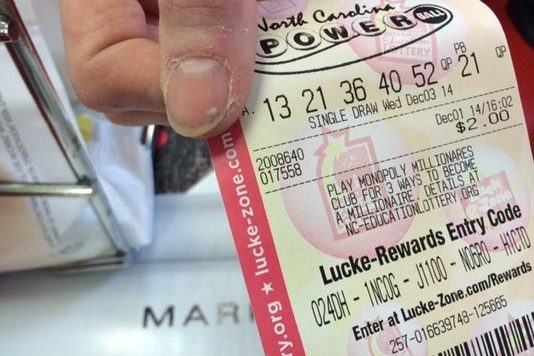
Where Does Lottery Money Go??
With sales approaching $2 billion last year, the North Carolina Education Lottery is big business. But has it made a big impact on local school budgets?
How Career and Technical Education in High School Improves Student Outcomes
Ask any group of high school teachers, and they will report that the most frequently heard question in their classrooms is, “When are we ever gonna use this?”
Achievement School District Moves Forward
The House Select Committee on Achievement School Districts met for a final time yesterday to approve the Committee report, which includes Rep. Rob Bryan’s Achievement School District (ASD) draft legislation.